
How it works
The path of a review: from channel to field.
Once set up, the cycle runs by itself. Your team deals only with the exceptions that need approval and the tasks that reach the field; the rest is on record.
LiveNo API required.
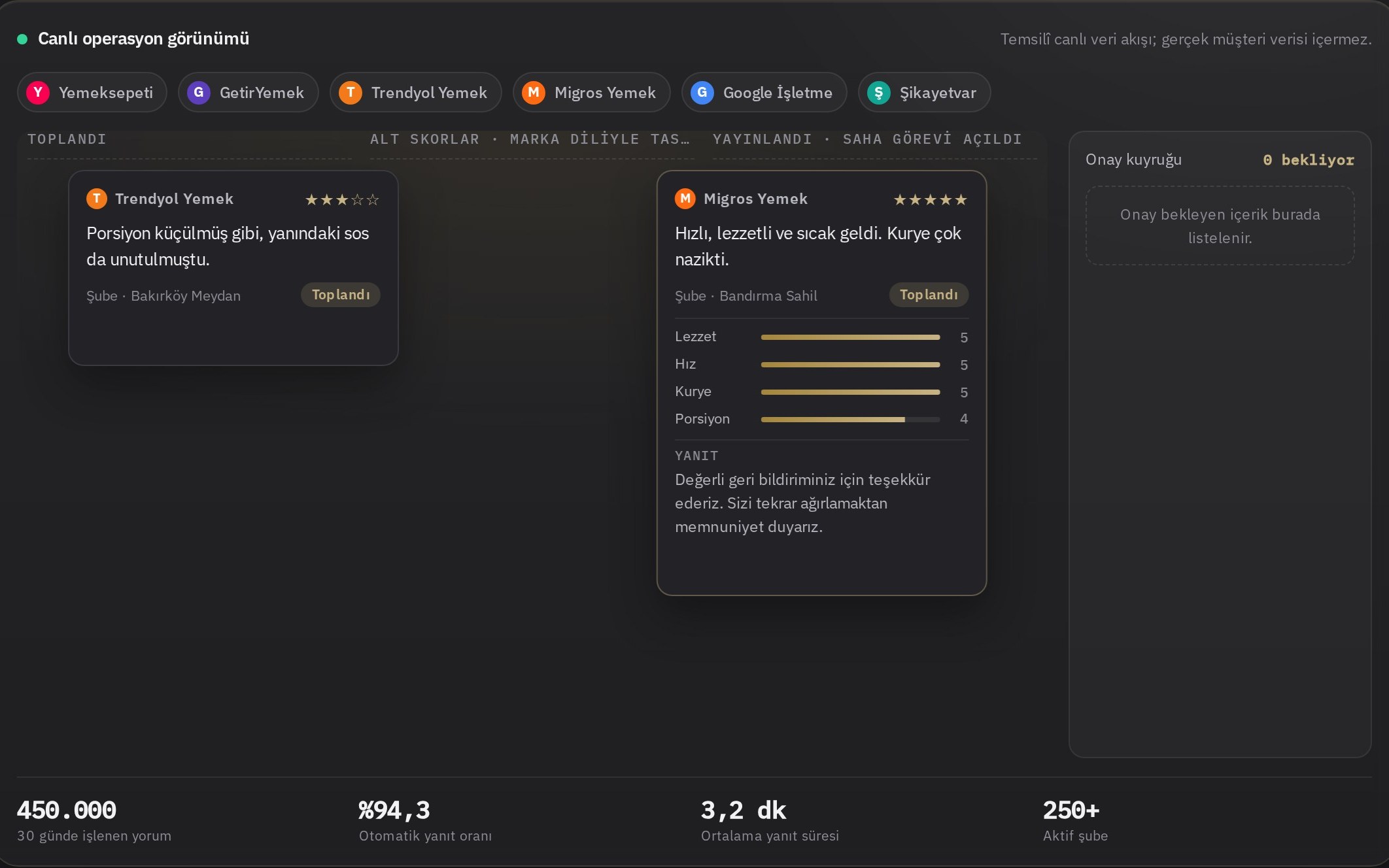
From review to task
The path a review follows through the day. No step involves copying by hand.
- 1
The review lands on a channel
A customer writes a review on one of the channels you are connected to; the rating and the text stay there.
- 2
A bot collects it
RPA bots connect to the platforms periodically and bring the new review to the centre; no API required.
- 3
It is broken into sub-scores
Where the score was lost is marked under taste, speed, courier and portion; sentiment and risk are determined.
- 4
A draft is written
The reply is generated from the rules your business unit wrote and your brand voice.
- 5
It publishes or goes to approval
A positive reply auto-publishes; negative and risky content lands in the approval queue and publishes when an authorised person approves.
- 6
The complaint becomes a task
A complaint a reply cannot close becomes a field task with an owner and an SLA; it escalates when the deadline passes and is flagged as a chronic case when it recurs.
Setup in four steps
It starts with one pilot brand; the difference is measured in 10 days.
- 1
Connect your channels
Branch accounts are defined for every channel you are connected to; the bots start scanning.
- 2
Introduce your brand voice
Your marketing and operations team write the reply rules; agents are trained to reflect your company culture.
- 3
Set roles and approval rules
Approver, auditor and operations roles; which reviews go out automatically and which with approval.
- 4
Define the SLA matrix
Target resolution time, priority, task threshold and recurrence window per category; field tasks open by these rules.
Data and permissions
Personal data is masked before a reply is generated.
Names, phone numbers and similar data in a review are masked automatically before the model sees them.
Each user sees only the branches they are entitled to.
Separation by region and branch; approver, auditor and operations roles with separate permissions.
Every step on record.
Who published what, who approved, who took over and when: all recorded with timestamps.
Start with one pilot brand.
Tell us which channels you are connected to and how many branches you have; let us connect one pilot brand and watch the first review land on a single screen together.